
Investing in real estate no longer requires living in the same city as your properties. In fact, some of the most successful rental portfolios in the country are managed entirely by out-of-state investors who rely on systems, data, and professional partnerships instead of proximity.
Memphis has remained a premier destination for remote investors in Q2 2026 due to its affordability, strong rental demand, and consistent cash-flow potential. But owning property from 1,000 miles away introduces one critical challenge: operational control.
Without the right structure, remote ownership can quickly turn into reactive problem-solving. With the right systems, however, it becomes a scalable and predictable income stream. This playbook breaks down how out-of-state investors can successfully manage Memphis properties while protecting ROI and staying compliant with 2026 Tennessee regulations.
Why Memphis is a Top Market for Out-of-State Investors in 2026
Memphis continues to attract remote investors for several key reasons that set it apart from high-priced coastal markets.
- Affordable Acquisition: With a median sale price hovering around $210,000, Memphis offers a lower barrier to entry than the national average.
- Strong Yields: The median rent for all property types is currently $1,295, providing healthy rent-to-price ratios.
- Economic Stability: Memphis’s status as a global logistics hub (FedEx) and a leader in healthcare and manufacturing ensures a consistent tenant population.
For investors focused on real estate investing in Memphis, the market offers a rare balance of affordability and stability. However, the real challenge isn’t acquiring the property—it’s managing it effectively from afar.
The Biggest Mistake Out-of-State Investors Make
The most common pitfall for remote investors is treating property management as an afterthought. Distance creates information delays. Information delays create inefficiency. Inefficiency reduces ROI.
In 2026, there is also a legal risk: The Tennessee Landlord Transparency Act (HB 1814) now strictly requires out-of-state owners to designate a Tennessee-based agent and provide local contact information to tenants. Failure to comply can lead to civil fines and complications in legal proceedings. That is why many rely on structured property management services to maintain both consistency and compliance.
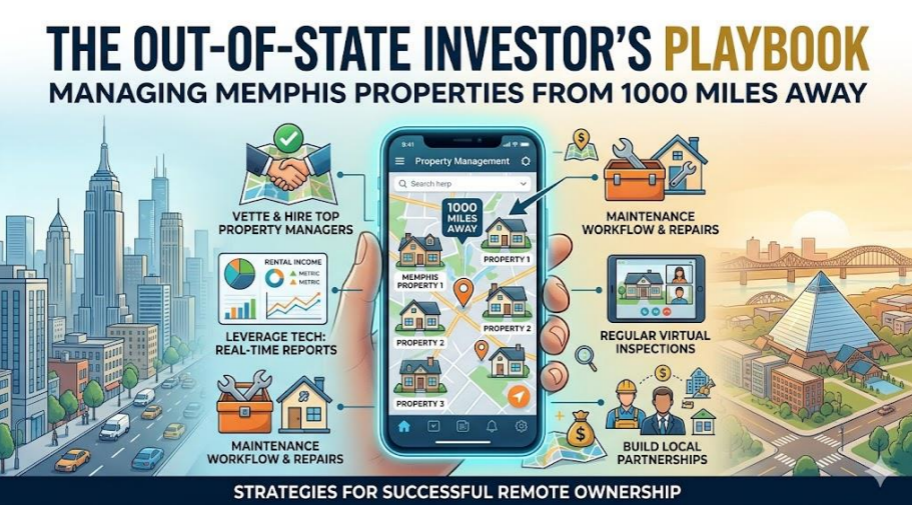
Step 1: Build a System, Not a Guesswork Approach
Remote investing only works when systems replace guesswork. Instead of reacting to problems, you need structured workflows for:
- Leasing: Standardized tenant criteria and automated marketing.
- Maintenance: A vetted vendor list that doesn’t require you to “find a guy” from three states away.
- Compliance: Ensuring your CrestCore Property Management team is listed as your official local contact per HB 1814.
Step 2: Choose the Right Local Operator
For out-of-state investors, your property management company is your “boots on the ground.” Choosing the right partner creates leverage; choosing the wrong one creates a second job.
Strong Memphis-based property managers typically provide:
- Rigorous tenant screening to protect your asset.
- Regular property inspections with photo/video documentation.
- Real-time financial reporting dashboards.
Before committing, review our property management FAQs to understand how a professional team handles the daily heavy lifting.
Step 3: Focus on Data, Not Distance
You cannot rely on physical walkthroughs, so you must rely on data-driven decision-making. Key performance indicators include:
- Days on Market: The average Memphis home currently takes 58 days to sell, but rentals should move much faster with a competitive pricing strategy.
- Maintenance-to-Income Ratio: Tracking repair costs ensures your cash flow remains healthy.
- Tenant Retention: Long-term stays are the #1 way to boost ROI by avoiding turnover costs.
Step 4: Treat Maintenance as Profit Protection
Many investors view maintenance as a cost. In reality, it is a risk management tool. Delaying a minor leak in a Memphis rental can lead to a $10,000 mold remediation project.
Professional Memphis property management services use preventative maintenance schedules to catch small issues before they become portfolio-destabilizing emergencies.
Step 5: Optimize Your Leasing Strategy
Leasing is the engine of your investment. A strong remote leasing system includes:
- High-Quality Marketing: Professional photography and placement on active rental listings.
- Vetted Screening: Verifying income and rental history to ensure the tenant is a good fit for the long term.
FAQ: Managing Memphis Properties Remotely
Can I legally manage a Memphis rental if I live in another state? Yes, provided you comply with HB 1814 by appointing a Tennessee-based agent (like a property manager) to receive legal notices and respond to tenant issues.
How do I know if my rent is competitive? The Memphis market is dynamic. Using a free rental analysis tool is the best way to ensure you aren’t leaving money on the table or suffering from overpriced vacancies.
Is Memphis a “landlord-friendly” city? Compared to many coastal states, Tennessee remains landlord-friendly, though new 2026 transparency laws emphasize the importance of professional representation.
Conclusion: Distance Doesn’t Limit Success—Systems Do
Out-of-state investing in Memphis is highly profitable when you move from a “DIY” mindset to a “System” mindset. The difference between a struggling remote investor and a successful one is the quality of their local team.
If you’re ready to optimize your remote portfolio or want to see how your properties stack up against the 2026 market, request a free rental analysis here or connect with us via the CrestCore contact page to learn more about our investor-focused solutions.
